State Checks and OptiWealth: Homebuyer Checklist for Australia

This tool is a generic calculator and does not advertise or promote a specific financial product. It is not intended to be relied on for the purposes of making a decision in relation to a financial product. You should consider obtaining advice from a financial services licensee before making any financial decisions.
State Checks and OptiWealth: Homebuyer Checklist for Australia
Follow this finance-first, due-diligence-led checklist to buy your first home in Australia with fewer surprises. Prepare your finances, check your eligibility for Help to Buy or state grants, get pre-approved, shortlist properties, commission due diligence, engage a conveyancer, then settle. Housing Australia, your state revenue office and independent tools like OptiWealth all play a part before you sign anything.
TL;DR:
Government schemes can significantly reduce deposit requirements but still require buyers to cover stamp duty, legal fees, and ongoing costs.
Conduct independent valuation and risk assessments before building inspections to avoid overpaying or overlooking property hazards like flood or zoning issues.
A pre-approval letter from a lender is essential to gauge borrowing capacity and strengthen offers, especially at auctions where cooling-off periods are limited.
Thorough due diligence, including building, pest, title, planning, and environmental checks, is critical to prevent costly surprises after purchase.
Engaging a conveyancer for contract review and arranging insurance from settlement day are key steps to protect your investment and ensure smooth settlement.
Table of Contents
-
1. Prepare your finances: deposit, upfront costs and affordability checks
-
2. Check eligibility for government help and state concessions
-
4. Search and shortlist: priorities, comparables and inspection checklist
-
5. Due diligence and inspections: building, strata, title and environmental checks
-
7. Conveyancing to settlement: legal checks, deposit and insurance
-
8. After settlement: immediate tasks and budgeting for ongoing costs
-
10. Author perspective: quick priorities from an experienced buyer’s view
-
11. OptiWealth FairBid: an optional tool to strengthen your due diligence
1. Prepare your finances: deposit, upfront costs and affordability checks
Before you look at a single listing, work out what the purchase actually costs beyond the deposit. Stamp duty, conveyancing fees, building and pest inspections, lenders mortgage insurance (LMI) and mortgage registration fees can add tens of thousands of dollars on top of the price you see advertised.
A 20% deposit avoids LMI altogether, but it is not the only path. Government guarantee schemes allow deposits as low as 5% for eligible buyers, and shared equity programs such as Help to Buy can lower the amount you need to save, though the government retains an equity share and you still cover stamp duty, legal fees, inspections and registration costs yourself.
Lenders will want to see your finances laid out clearly before they consider you.
-
Two years of tax returns or Notices of Assessment
-
Recent payslips and employment confirmation
-
Three to six months of bank statements showing genuine savings
-
A list of existing debts, credit cards and other liabilities
Run a simple affordability test: add your likely mortgage repayment to council rates, home insurance and any strata levies, then check that figure comfortably fits your monthly budget with room for interest rate rises.
Pro Tip: Open a dedicated savings account with automatic weekly transfers, and consider a short-term term deposit for funds you will not touch for six to twelve months. It removes the temptation to dip in and shows lenders a consistent savings pattern.
2. Check eligibility for government help and state concessions
Government schemes can be the difference between an unaffordable deposit and a viable purchase, but none of them remove your ongoing obligations. Under Help to Buy, the Australian Government requires you to contribute a minimum deposit and may contribute a substantial portion for new or existing homes. You still pay stamp duty, legal and conveyancing fees, inspections and mortgage registration costs yourself, and income, asset and owner-occupier conditions apply.
First Home Owner Grants and stamp duty concessions are set state by state, not federally, so the amount you are entitled to depends entirely on where you buy. In New South Wales, for instance, Revenue NSW confirms a notable grant amount for a new or substantially renovated home in 2026, with eligibility tied to age, residency and prior-ownership rules. Other states run their own versions with different thresholds, so check your own state revenue office before assuming what you will receive.
Before applying anywhere, gather:
-
Proof of identity and residency status
-
Evidence of genuine savings, typically a minimum 2% contribution
-
Details of the property’s price and whether it falls under any relevant cap
-
Confirmation you meet the first home buyer definition in your state
3. Get pre-approval and decide whether to use a broker
Pre-approval is not the same as final approval. It is a lender’s conditional indication of how much they will lend based on your current financial position, and it strengthens your position when making offers because sellers and agents take a pre-approved buyer more seriously than one still shopping around for finance.
To apply, most lenders will ask for a similar bundle of documents:
-
Notice of Assessment or recent tax return
-
Recent payslips and an employment letter
-
Bank statements showing genuine savings and existing debts
-
Photo identification and proof of address
Compare lenders on more than the advertised rate. Look at application fees, ongoing account fees, offset account availability and the flexibility of extra repayments. A mortgage broker can be worth engaging if you want access to a wider panel of lenders and help navigating serviceability rules, particularly when your situation includes irregular income or a smaller deposit under a guarantee scheme.
4. Search and shortlist: priorities, comparables and inspection checklist
Set your must-haves and nice-to-haves before you start browsing, and define a realistic price band based on your pre-approval, not the top of your borrowing limit. Bedrooms, commute distance and proximity to schools usually sit in the must-have column; a pool or a north-facing courtyard belongs in nice-to-have.
Check recent comparable sales in the suburb before trusting a listed price. Agents sometimes list below likely sale price to generate competition, so comparables tell you what the property is actually likely to fetch.
At each inspection, work through a short mental checklist:
-
Cracks in walls, uneven floors or signs of recent patchwork paint
-
Water stains, mould smell or damp in bathrooms and subfloors
-
Condition of the roof, guttering and any visible plumbing or electrical work
-
Traffic noise, neighbouring properties and street parking at different times of day
5. Due diligence and inspections: building, strata, title and environmental checks
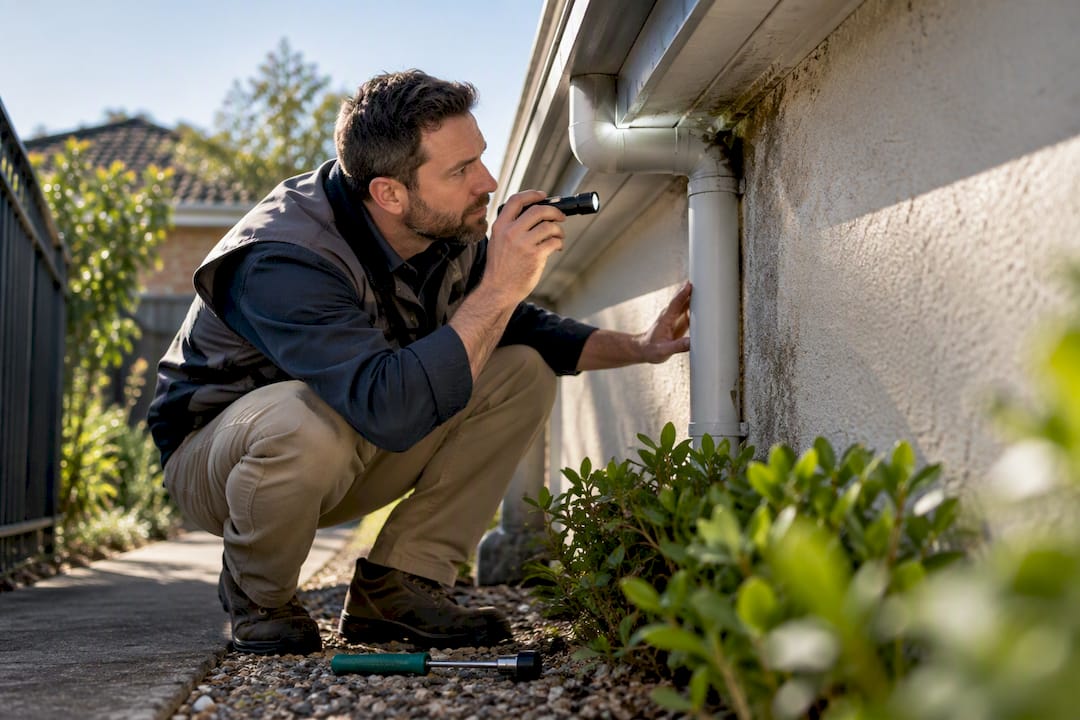
This is the stage where a good buy turns bad if you skip steps. A building and pest inspection should be booked before you commit to anything, and typical findings such as minor subfloor moisture, ageing wiring or a leaking gutter are common and often negotiable rather than dealbreakers, though termite activity or structural movement usually need a specialist follow-up.
For any strata or owners corporation property, request the owners corporation records, recent meeting minutes, the sinking fund statement and a summary of upcoming levies. A healthy sinking fund and clean minutes suggest a well-run building; frequent special levies or unresolved disputes are a warning sign.
Title, planning and environmental checks each need a different expert:
-
A conveyancer or solicitor for title, easements and covenants
-
The local council for zoning, planning overlays and any development approvals nearby
-
State planning or environmental authorities for flood, bushfire and contamination risk
Consumer Affairs Victoria’s due diligence checklist covers title, planning and zoning, owners corporation obligations, flood and fire risk, contamination and boundaries, and it is a useful starting point, though it explicitly does not replace independent checks. Flood, bushfire, contamination or mining proximity can materially affect price and future insurance costs even when a house looks fine on the day you inspect it.
Where a property is older or shows signs of renovation, commission specialist reports too, such as an electrical safety check, an asbestos assessment for homes built before the mid-1980s, or pool compliance certification if there is a pool or spa.
Pro Tip: Order your building and pest inspection early in the process, even before you make an offer on a property you are serious about. It gives you time to negotiate price or walk away without losing your deposit.
6. Making offers, negotiating and auction strategy
Private sale and auction work very differently, and the legal consequences of each matter before you commit to either.
-
Confirm whether the property is being sold privately or at auction, since auction purchases typically remove your cooling-off period.
-
For a private sale, structure your offer with conditions such as finance approval and a satisfactory building inspection, and set a firm walk-away price before you start negotiating.
-
For an auction, have your contract reviewed by a conveyancer beforehand, arrange deposit funds ready to transfer immediately, and set a strict bidding cap you will not exceed regardless of what happens on the day.
-
After a successful auction bid or accepted private offer, confirm the exchange date, deposit amount and any special conditions in writing before signing.
Consumer Affairs Victoria notes that a pre-auction legal review is essential precisely because auctions remove many of the usual cooling-off protections, so the paperwork check needs to happen before you raise your paddle, not after.
7. Conveyancing to settlement: legal checks, deposit and insurance
Have a licensed conveyancer or solicitor review the contract before you exchange, not after. According to NSW Government conveyancing guidance, core responsibilities include reviewing contract special conditions, checking for unpaid rates, confirming there is no illegal work on the property, verifying government interests and easements, and preparing settlement adjustments. Most buyers engage a licensed professional for this because DIY conveyancing increases personal liability if something is missed.
Your conveyancer typically handles or confirms:
-
Deposit handling and whether funds are held in trust
-
Mortgage documents and liaison with your lender’s settlement team
-
Transfer of title and registration with the relevant land titles office
-
Final adjustments for rates, water and any other outgoings apportioned between buyer and seller
Arrange building insurance to start from settlement day, not after you move in. A property is your financial responsibility from the moment settlement occurs, even before you collect the keys. In the days before settlement, confirm the final loan figures with your lender and check the settlement statement with your conveyancer so there are no last minute surprises about what you owe.
State-specific detail matters here: contract forms, cooling-off rights and stamp duty rules differ from one state to another, so always verify the specific law and thresholds that apply where the property is located, ideally with your conveyancer confirming it directly with the relevant state revenue office.
8. After settlement: immediate tasks and budgeting for ongoing costs
Once settlement is complete, a short list of practical jobs needs doing quickly.
-
Confirm building and contents insurance is active from settlement day, not the day you move in.
-
Set up electricity, gas, water and internet connections ahead of your move.
-
Update your address with the Australian Electoral Commission, your bank and Medicare.
-
Register with the local council for rates and check the billing cycle.
Beyond the first week, budget for the ongoing costs of ownership: council rates, insurance premiums, strata levies if applicable, routine maintenance and repairs, and a buffer for interest rate movements on your mortgage.
9. How independent due diligence complements legal checks
A conveyancer confirms the legal position of a property. A building inspector confirms its physical condition. Neither typically tells you whether the asking price reflects genuine market value, or flags a defect pattern against comparable properties nearby.
An independent audit that uses spatial data and historical valuation trends can add a layer most buyers skip entirely.
-
A quantitative valuation benchmarked against comparable sales in the area
-
A defect breakdown separate from, and complementary to, a physical building inspection
-
Risk flags covering factors like flood exposure or zoning changes
-
Historical valuation trend data for the specific address
Reports like the sample outputs on OptiWealth FairBid show how a defect breakdown and valuation summary can sit alongside your building inspection report, rather than replacing it, before you make a final decision to bid.
Pro Tip: Run an independent valuation and risk audit before your building inspection, not after. If the numbers or risk flags raise concerns, you may decide the inspection cost is not worth spending at all.
10. Author perspective: quick priorities from an experienced buyer’s view
If you take one thing from this checklist, get finance clarity first. Do not fall in love with a property before you know exactly what you can borrow and what it will actually cost to own. A pre-exchange conveyancer review and a thorough building inspection are not optional extras, they are the two checks most likely to save you from an expensive mistake.
Keep emotion out of the bidding room and keep a financial buffer for the unexpected. The best deal is rarely the one that felt exciting on the day.
11. OptiWealth FairBid: an optional tool to strengthen your due diligence
A building inspection tells you what is wrong with a property. It rarely tells you whether the asking price is fair, or how a property compares against similar homes nearby. OptiWealth FairBid offers an independent market valuation, defect screening and risk summary built specifically for buyers rather than sellers, with no agent or broker kickbacks influencing the result.
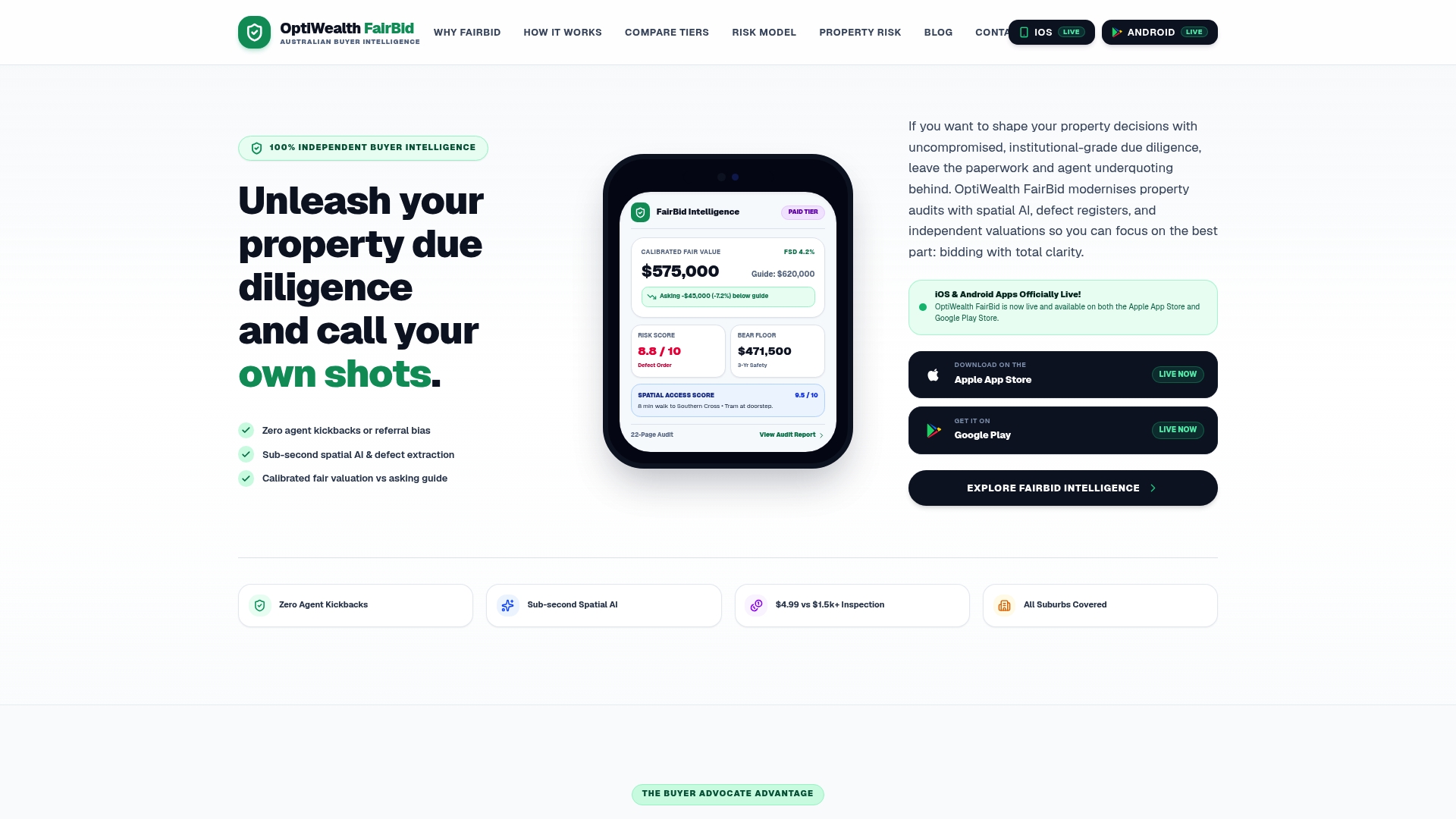
The platform is available across Australia through a free tier and a paid tier that offers detailed audit reports. If you want a data-driven second opinion before you bid, check a property on OptiWealth FairBid alongside your usual legal and inspection checks.
Sources
FAQ
How much income do you need to buy a $650,000 house in Australia?
There is no single published income figure for a property purchase, since it depends on your deposit size, existing debts and the lender’s serviceability test. Get pre-approval from a lender or broker who can calculate this against your specific finances and current interest rates.
What are the key things to consider when buying your first home in Australia?
Focus on total upfront costs including stamp duty, LMI and legal fees, your eligibility for schemes like Help to Buy, and thorough due diligence covering building condition, title and planning risks. A conveyancer review before exchange and a building and pest inspection are the two checks that matter most.
Is $40,000 enough for a house deposit?
It depends entirely on the purchase price and which state you are buying in, since a deposit represents a different percentage depending on the property price and state. Government guarantee schemes can support deposits as low as 5% for eligible buyers, so a smaller deposit may be workable with the right program even if it falls short of 20%.
What should I check on my first home buying checklist?
Your checklist should cover finance and pre-approval, eligibility for grants or guarantees, a building and pest inspection, title and planning checks, and a conveyancer’s contract review before exchange. State-specific due diligence checklists, such as the one from Consumer Affairs Victoria, are a useful starting point but do not replace independent checks on the specific property.
Recommended
OptiWealth Research
Transparent Data Science & EngineeringData Science, Software Architecture & Mathematical Risk Modeling Group
Authored by OptiWealth’s Quantitative & Data Engineering division. Our team specializes in full-stack software architecture, open-source data science, and spatial econometric property valuation (such as hedonic price regression, environmental zoning overlay synthesis, and cash-flow yield analytics). All underlying algorithms and calculation formulas are fully transparent, open to inspection, and designed purely for financial and property data visualization.
Expose Hidden Property Risks & Liabilities
OptiWealth replaces guessing games with algorithmic diagnostics. Use FairBid to audit council overlays, building defects, and calculate true net property yields.