Building inspection checklist: 6 audit checks for Australian buyers
This tool is a generic calculator and does not advertise or promote a specific financial product. It is not intended to be relied on for the purposes of making a decision in relation to a financial product. You should consider obtaining advice from a financial services licensee before making any financial decisions.
Building inspection checklist: 6 audit checks for Australian buyers
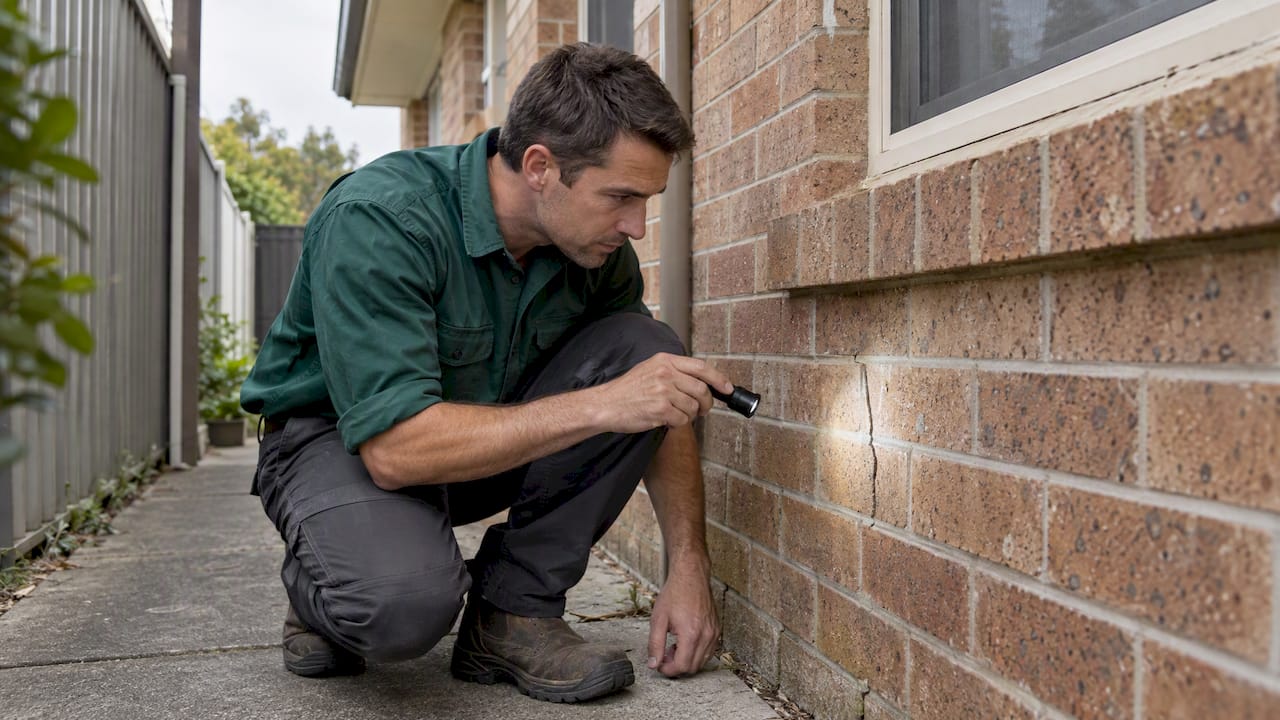
The building inspection checklist that matters most to a prospective Australian buyer is not a physical-condition form. It is an independent audit that pairs a current market valuation with underquoting checks, a strata and owners corporation review, planning overlay verification and a hidden-cost estimate, commissioned before you bid or exchange contracts. We recommend ordering this audit first, because vendors generally have no obligation to disclose building condition in most jurisdictions, which places the research burden squarely on you.
TL;DR:
- Set your bid cap using at least three unconditional comparable sales from the past three months, plus an independent valuation with a downside threshold.
- For strata purchases, review two to three years of AGM minutes, the sinking fund balance, maintenance plan, budget, insurance, and special resolutions.
- Check bushfire and flood overlays through the council planning portal; title conditions may require vegetation management, compliant water supplies, or other ongoing work.
- Order specialist structural, asbestos, or termite inspections only when the audit flags a specific risk, and retain price guides and agent messages as underquoting evidence.
- Complete valuation work before auction to set a bid cap; obtain strata records, title checks, and targeted defect reports before exchanging contracts.
Table of Contents
- The buyer audit checklist: what to order and verify before you commit
- How to commission, combine and interpret your reports
- Owners corporation finance checks that predict your future costs
- Check bushfire, flood and other planning overlays before you buy
- Setting your valuation and handling suspected underquoting
- Where buyers should prioritise their due diligence spend
- OptiWealth FairBid: order an independent audit before you bid
- FAQ
- Sources
The buyer audit checklist: what to order and verify before you commit
Every item below produces a document you can hold in your hand before auction day or before you sign a contract. We sequence them from highest financial impact to most procedural, because that order reflects where buyers lose the most money.
- Independent market valuation: request comparable sales from the past three months, a disclosed valuation method (hedonic modelling or spatial AI), and an explicit downside or bear-case threshold rather than a single point estimate.
- Underquoting check: capture the advertised price guide or Statement of Information in writing, then compare it against unconditional sold results for genuinely comparable properties nearby.
- Strata or owners corporation review: request AGM minutes from the past two to three years, current budgets, the maintenance plan, insurance schedules and any special levy notices.
- Planning overlay search: check for Bushfire Management Overlay, Bushfire Prone Area status, flood overlays and any permit conditions attached to the title.
- Hidden holding cost estimate: use strata records and council correspondence to project likely special levies, compliance works and insurance shortfalls for the next three to five years.
- Defect-risk flagging: treat the audit’s defect flags as a trigger, not a verdict, commissioning a structural engineer, asbestos assessor or termite inspector only where the audit points to a specific risk.
The sequencing matters as much as the content. Valuation and the broader independent audit belong before auction, because they set your bid cap and your walk-away price. Strata searches, title checks and specialist defect reports generally belong in the window before contract exchange, once you have a specific property under serious consideration and the vendor’s conveyancer can release the Section 32 or vendor statement.
Underquoting remains a live enforcement issue. Consumer Affairs Victoria explains that agents are required to provide accurate price information and a Statement of Information that reflects their own estimated selling price, backed by comparable sales. Keep every advertisement, every verbal price indication and the Statement of Information itself, because this is the evidence a complaint relies on.
Vendors are not generally required to volunteer a building condition report. The Registrar-General NSW review of vendor disclosure notes that most jurisdictions place that burden on the purchaser, with the ACT a notable exception for certain auction properties, and it points to Australian Standard AS 4349.1 as the relevant benchmark for inspection reports commissioned independently.
Pro Tip: Order your independent valuation and audit before you attend a single open inspection on your shortlist. A bid cap set in advance stops auction-day emotion from overriding your own numbers.
How to commission, combine and interpret your reports
Treat this as a timing problem first and an interpretation problem second. Order the independent valuation and audit as soon as a property enters serious consideration, well before auction. Leave strata searches, conveyancer title checks and any specialist defect report until closer to contract exchange, once the vendor’s documentation is available.
When a valuation or audit report lands, check that it states:
-
The valuation method used, whether hedonic pricing or a spatial AI model, rather than a single unexplained figure.
-
The specific comparable sales relied on, ideally unconditional results from the past three months.
-
A downside or bear-case scenario alongside the central estimate, not just an upper range.
-
Any caveats about data gaps, such as thin comparable sales in a suburb.
A strata search should return AGM minutes, the sinking fund balance, the maintenance plan, current insurance and a record of recent special resolutions. Once valuation, strata and any specialist findings are in hand, we suggest writing a one-page decision memo: a firm price cap, a remediation allowance if defects were flagged, and any walk-away conditions. If the numbers in your Statement of Information evidence point to underquoting, lodge that documentation with Consumer Affairs Victoria or your state’s equivalent regulator, since complaint volumes have been reported as rising in recent coverage.
Pro Tip: Ask your conveyancer to flag any special resolution in the AGM minutes that mentions capital works. That single line item is usually the earliest public signal of a coming special levy.
Owners corporation finance checks that predict your future costs
Strata finance documents tell you more about your likely holding costs than the unit’s paint and carpet ever will. We treat a current budget, the maintenance plan and sinking fund projections as the baseline documents, because they show whether the owners corporation is funding future capital works or deferring them.
- Compare the sinking fund balance against the maintenance plan’s forecast spend to check for an obvious shortfall.
- Note the lot’s initial liability share, since a high liability percentage means a larger dollar share of any future levy.
- Read the past two to three years of AGM minutes for early mentions of capital works, litigation or developer-retained control, a practice strata reporting guidance from Registrar-General NSW treats as standard due diligence.
- Confirm current building insurance is in place and check for any noted claims history or exclusion.
Our strata report guide for NSW, QLD and VIC buyers walks through how to read these documents line by line. Where governance looks weak or minutes are incomplete, a certified statement from the owners corporation manager or your conveyancer is worth the modest extra delay.
Check bushfire, flood and other planning overlays before you buy
Planning overlays attach to the title, not the vendor, which means any ongoing obligation becomes yours at settlement. We treat an overlay search as mandatory alongside the physical audit, not as an optional extra.
- Check for Bushfire Management Overlay and Bushfire Prone Area status, both of which can carry permit conditions for vegetation clearance and water tank provision, as Planning Victoria’s bushfire controls guide sets out.
- Check flood overlays and any local flood schedule attached to the property.
- Run a property report through the relevant council planning portal and request written clarification from the council or responsible authority where a condition is unclear.
These obligations are enforceable and ongoing, covering things like maintaining defendable space or a compliant water supply, as outlined in Planning Victoria’s guide to building in the bushfire management overlay.
Setting your valuation and handling suspected underquoting
Your bid cap should come from data, not from the agent’s quoted range. We treat three genuinely comparable, unconditional sold results from the past three months as the minimum evidence base for any valuation decision.
- Pull at least three comparable sold prices from the last three months, weighting unconditional results over anything still subject to finance or building clauses.
- Use an independent valuation output, whether hedonic or spatial AI based, to generate a downside threshold rather than relying on a single midpoint figure.
- Where the advertised guide sits well below your comparable evidence, keep the Statement of Information and all agent correspondence as a paper trail.
Underquoting complaints have risen sharply, and buyer’s agents increasingly recommend relying on sold results rather than advertised guides, a pattern consistent with earlier reporting on the same dynamic. For negotiation leverage once you have this evidence, our guide to house price negotiation using underquoting and strata levers sets out how to use it at the table.
Where buyers should prioritise their due diligence spend
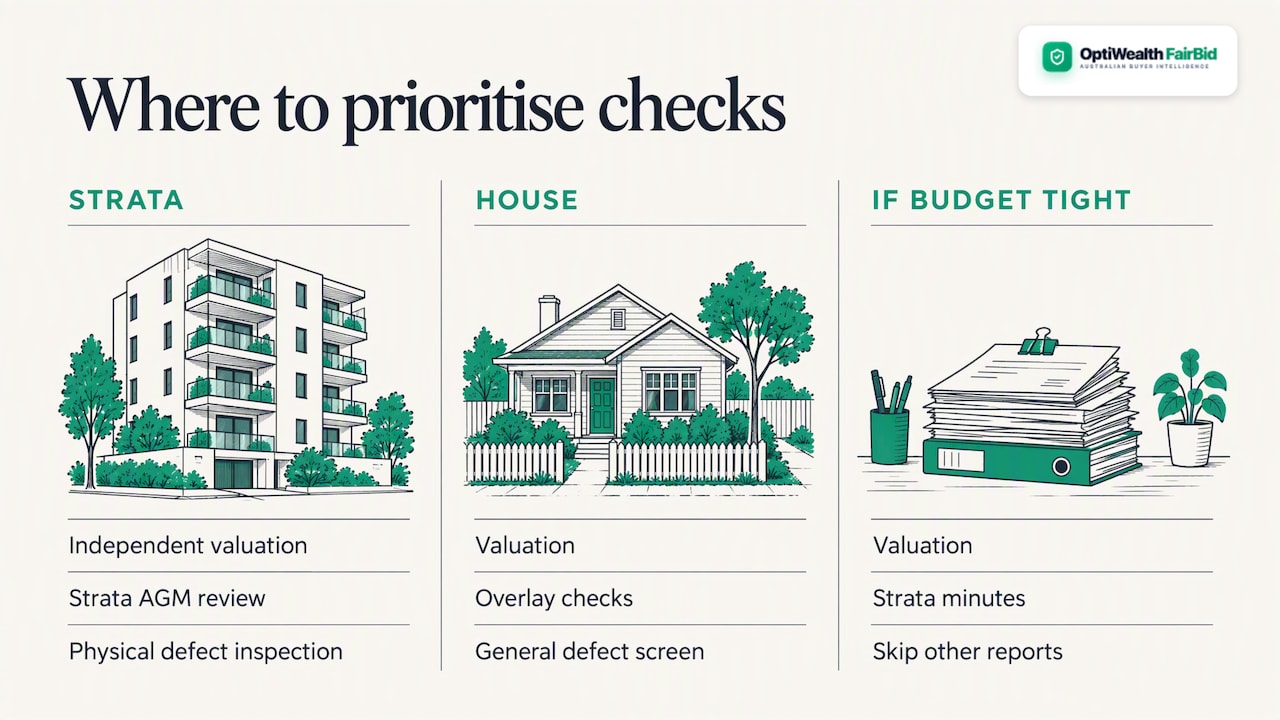
Few buyers can commission every report on every shortlisted property, so prioritisation matters. For a strata purchase, we rank an independent valuation and a strata AGM review above a physical defect inspection, because governance and levy risk tend to drive the larger unbudgeted costs. For a house, valuation, overlay checks and a general defect screen come first, with a full structural or pest report reserved for properties where the screening flags something specific.
When budget is genuinely tight, the valuation and the strata minutes are the two documents we would never skip. They carry the biggest financial surprises and the least chance of being corrected after settlement.
— JeongSuk Lee
OptiWealth FairBid: order an independent audit before you bid
We built FairBid to give Australian buyers the audit this checklist describes, in one report rather than five separate phone calls. Our spatial AI valuation model, defect-risk screening, strata and overlay checks run as a single neutral assessment, with no agent commissions or listing kickbacks shaping the result.
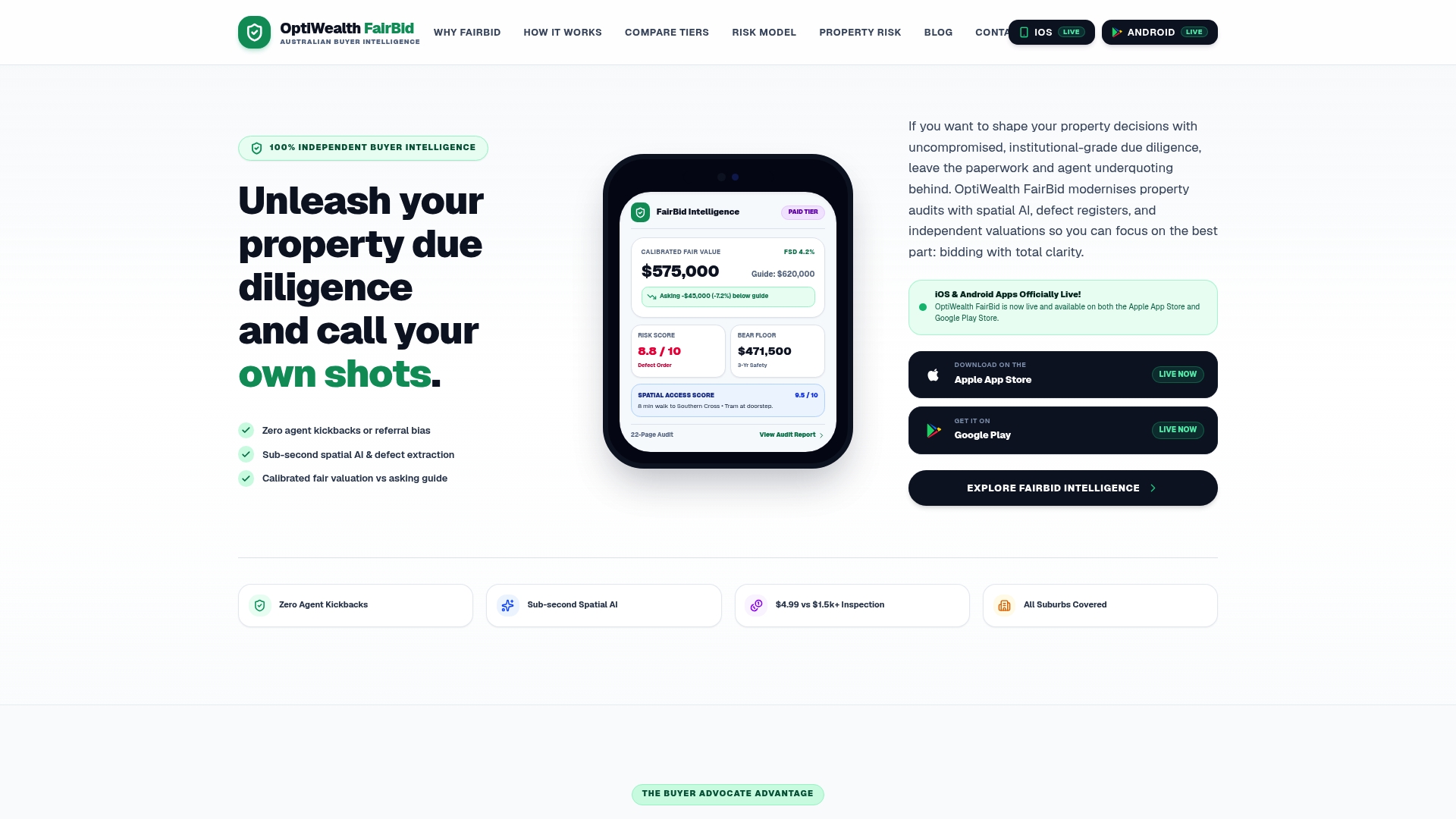
- View a sample FairBid audit report to see how valuation, overlay and strata findings are presented together.
- Start with the Free Tier to access baseline property data, then upgrade to the Paid Advocate Tier for the full independent audit before you commit to a bid.
- Order your report from the OptiWealth home page once you have a specific address under serious consideration.
FAQ
What should a buyer’s building inspection checklist actually include?
A buyer-focused checklist includes an independent market valuation, an underquoting check against sold results, a strata or owners corporation records review, a planning overlay search, and a hidden holding cost estimate, with specialist defect reports commissioned only where the audit flags a risk.
How do I check if a property is underquoted?
Compare the advertised price guide or Statement of Information against genuinely comparable unconditional sold results from the past three months, and keep all agent communications as evidence. Consumer Affairs Victoria sets out the disclosure obligations agents must meet and the process for lodging a complaint.
What strata documents reveal hidden special levy risk?
Request AGM minutes from the past two to three years, the current budget, the maintenance plan, sinking fund balance and insurance schedule, since capital works and special resolutions typically appear in meeting minutes before a levy notice is issued.
Do vendors have to disclose building defects before I buy?
In most Australian jurisdictions vendors are not required to provide a building condition report, which is why purchasers commission their own inspection against standards such as AS 4349.1, as noted in the Registrar-General NSW vendor disclosure review.
How much does an independent FairBid audit cost?
The Paid Advocate Tier is a 4.99 AUD one-off report covering valuation, overlay, strata and defect-risk findings, with a Free Tier available for baseline property data, at no cost.
Sources
- Understanding property prices and underquoting for buyers - Consumer Affairs Victoria
- Review of vendor disclosure for residential property sales — Registrar‑General NSW
- Bushfire controls — Planning Victoria
- ‘Widespread’ underquoting is bringing homebuyers to ‘tears’ — but the solution depends on who you ask - ABC News
Recommended
- Avoid settlement shocks: contaminated land checks in Australia from $34
- Home buyers and owners: manage asbestos in homes with a property audit
- $4.99 FairBid Audit: Strata Report Explained for NSW, QLD and VIC Buyers
The information provided in this publication is for educational and general information purposes only and does not constitute financial, investment, taxation, or legal advice under the Corporations Act 2001 (Cth). Property buyers and investors should conduct independent physical, legal, and strata due diligence and seek advice from a licensed financial advisor, solicitor, or conveyancer tailored to their personal objectives before entering into any legally binding contract of sale.
OptiWealth Research
Transparent Data Science & EngineeringData Science, Software Architecture & Mathematical Risk Modeling Group
Authored by OptiWealth’s Quantitative & Data Engineering division. Our team specializes in full-stack software architecture, open-source data science, and spatial econometric property valuation (such as hedonic price regression, environmental zoning overlay synthesis, and cash-flow yield analytics). All underlying algorithms and calculation formulas are fully transparent, open to inspection, and designed purely for financial and property data visualization.
Expose Hidden Property Risks & Liabilities
OptiWealth replaces guessing games with algorithmic diagnostics. Use FairBid to audit council overlays, building defects, and calculate true net property yields.